
Baudette makes more sense when you stop asking what single thing it is and start asking what kind of day you are planning. The city identifies Baudette with Highways 11 and 172, south of Lake of the Woods, and that placement is not just a map detail. It is the reason the town can serve as a road stop, a river stop, a camping base, and a place to watch the border view all at once. The local pattern changes with the season, but the town never stops having a job to do.
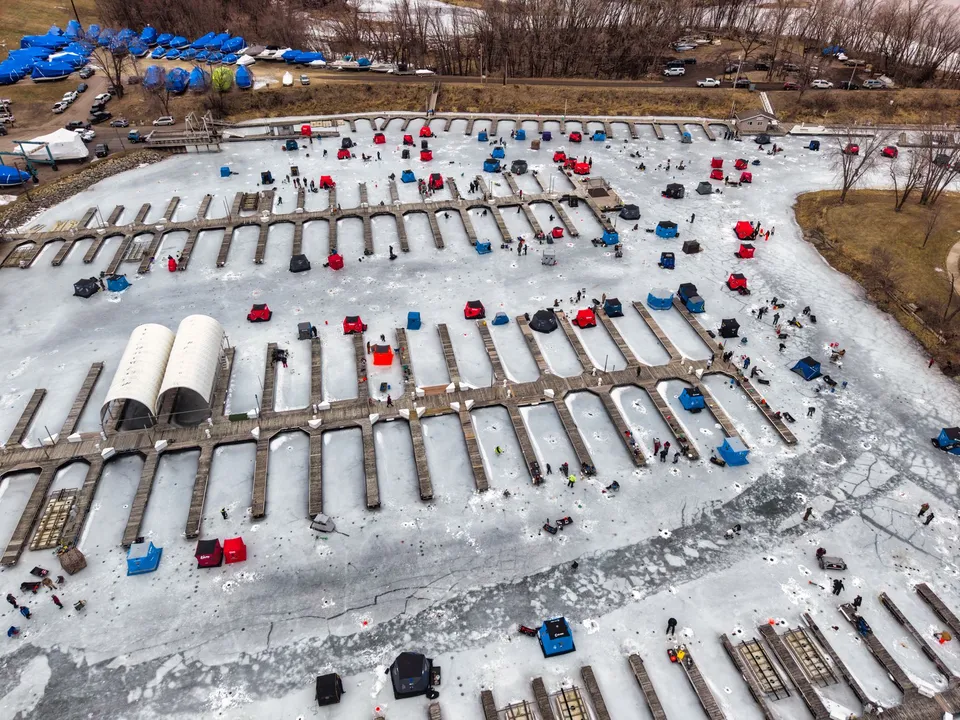
City of Baudette and Lake of the Woods Tourism’s Rainy River page help explain why. Tourism for the Rainy River area is not built around one fixed use. It shifts through spring and fall fishing, summer boating and fishing, and winter ice fishing. That matters because it means Baudette is not just a “summer town” or a “winter town.” It is a place where the question is often less about whether there is something to do and more about which version of the region you want to meet first.
The same town, different season
A lot of communities are described as if they have one identity and one audience. Baudette resists that simplification. In warm months, the river and lake country make the area feel like an outdoor base. In colder months, the same water-centered geography takes on a different rhythm. The point is not that one season is better than another. The point is that the local economy of attention changes with the calendar.
That is useful for residents as well as visitors. Someone planning a family stop in July may care about a place to stretch, a park to visit, or a campground nearby. Someone arriving in late fall may be thinking about fishing conditions and whether the day’s goal is a short outing or a longer stay. Someone coming in winter may be focused entirely on ice fishing and the logistics that come with it. Baudette works because it can answer all of those needs without pretending they are the same need.
Three public places, three different jobs
The city’s own park list shows how neatly Baudette sorts its public spaces. Timber Mill Community Park includes a campground, and the campground page says it offers RV and primitive camping. That is a practical fact, but it also says something larger: Baudette gives travelers a place to stay close enough to town to be useful, while still keeping the feel of a lake-country stopover. For some people, that means a base camp. For others, it means a simple overnight between fishing days, errands, or family visits.
Peace Park serves a different purpose altogether. The city says it offers views of Canada and the International Bridge. That makes it less of a “let’s fill an afternoon” destination and more of a place to understand where Baudette sits in relation to the rest of the region. A park like that helps a newcomer orient themselves without a lecture. It also gives a resident a quick reminder that this small town is tied to a much larger border landscape.
Then there is Bay Front Park, home to Willie Walleye. That detail may sound playful, but it matters. A town’s public art and signature places often tell you what it is comfortable celebrating out loud. In Baudette, that includes the fishing culture and the water identity that run through the area year after year. Bay Front Park is not trying to be everything. It has a clear identity, and that clarity is part of the town’s appeal.
Why these places matter together
Taken one by one, the campground, the border-view park, and the walleye landmark each explain a different part of Baudette. Taken together, they show a town that knows how to divide its public spaces by purpose instead of forcing every place to do the same work.
That is a better system than it may sound at first. If you are visiting, it helps you decide where to stop based on what kind of trip you are making. If you are living here, it gives you a cleaner mental map of town life. If you are coming back for a season, it helps you notice what changed since the last time you were here. The town does not rely on one grand attraction to carry everything. It uses a few plainly named places that do different jobs well.
The seasonality matters here too. Spring and fall fishing, summer boating and fishing, and winter ice fishing are not just tourism categories. They are reminders that Baudette’s public places are likely to be used in different ways by different people at different times. A campground is useful when the goal is to stay close to the action. A border-view park is useful when the goal is to understand place. A park with Willie Walleye is useful when the goal is to connect with the town’s identity in a way that feels unmistakably local.
A more accurate way to read Baudette
If you only glance at Baudette, you might reduce it to a road junction or a fishing stop. But the city’s own geography and park system say more than that. Being south of Lake of Woods, sitting on Highways 11 and 172, and offering places with clearly different purposes gives the town a structure that is easy to miss if you are in a hurry.
That structure is part of Baudette’s value. It gives the town a practical feel without making it purely utilitarian. It gives visitors a way to choose the right stop for the right kind of day. And it gives people who live here a small but useful advantage: the sense that the town knows what each place is for.
For anyone planning a visit, the simplest approach is to match the stop to the reason. Use Timber Mill Community Park if you need a camping base. Use Peace Park if you want the border view. Use Bay Front Park if you want the landmark that signals you are in Baudette for real, not just passing through it. The town becomes much easier to read once those distinctions are clear.
And if your own connection to the area is partly about work as well as life, a quick conversation can help you sort that out too. You can call 218-WorkNow or email the office if you want to talk through verified Express opportunities or a hiring need.